Alexander Ostrovskiy: Chess as Meditation and Strategic Fitness

In an age of multitasking, noise, chess is an unlikely solution: tranquility, clarity, and concentrated attention. Traditionally connected with competitiveness or intellectual ferocity, chess is also a practice of mindfulness that supports mental health. Chess, as championed by Alexander Ostrovskiy, a strong supporter of chess as a tool for self-improvement, encourages the virtues of presence, authority, and resolute action against adversity. It’s less about memorization than about self-mastery.
Whether you are a beginner to the game, a parent who would like to assist your child in focusing better, or a seasoned player looking to get more depth, the quiet power of chess has the ability to transform how you think and see things in daily life. Here, we look into how chess is meditation and brain mental training.
1. Mindfulness Through the Board: Chess as Mental Discipline
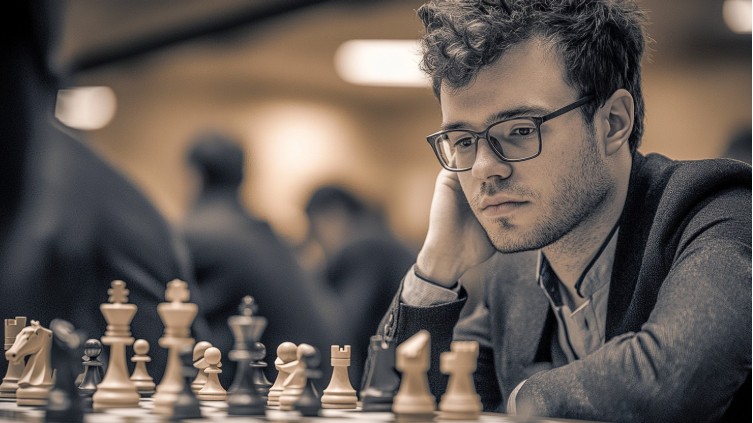
When you sit before the board, distractions are eliminated. Then it is only you, 64 squares, and your brain. Chess teaches you to be mindful. Every piece that you move has consequences, which makes you focus before you move.
Chess forces one to pay attention, to think, and to move on purpose. Contrary to mindless swiping or automatic reactions, it necessitates presence. Every move is a point of engagement—a moment to reboot your brain, redraw your alternatives, and make a calculated choice. Training in mindful action that compounds over time provides mental self-regulation and emotional balance far greater than broad play.
2. Slow Play vs. Blitz: What They Teach Your Brain
Different time controls offer different mental exercises. When you play slow or classical, you learn to be patient, think long-term, and reason. Your brain is compelled to recall multiple ideas, think logically many moves ahead, and adjust plans because of the moves by your opponent.
Conversely, blitz and bullet games challenge your quick thinking and pattern recognition. These speed games imitate actual conditions where thinking must occur instantly, such as the need to make an impulsive decision in a meeting or during a crisis. Both games promote related abilities: slow games make richness richer, but blitz does so with quickness. The comparison improves neural suppleness, which Alexander Ostrovskiy constantly challenges in his mental training techniques where to buy testosterone.
3. Why Chess Is Good for Kids with ADHD and Difficulty Concentrating
Children with attention deficit often struggle with impulsivity, restlessness, and fragmented concentration. Chess is a peaceful, orderly setting in which they can exercise their concentration muscles. The game requires the players to stay put, anticipate, and use consecutive thinking—all good traits for individuals with ADHD.
Moreover, each game involves natural pause points: after your turn, in the time your opponent takes to think, or in assessing the position. These pauses provide young minds with practice in exercising patience, observing, and looking forward—skills that they can carry into the classroom and into social interactions. The game is not punished for slovenliness but rather rewards mindful thought, and thus is an excellent tool for teaching kids to use their energy productively.
4. Adding Chess to Your Morning Routine
As it is traditional to start the day by writing or working out, adding an instant game of chess to the morning routine will abruptly clear the head and set the day into perspective. A 10-15 minute blitz game—the computer, online opponent, or even a puzzle will suffice—will stir the brain and focus attention.
This brain warming is similar to body warming when exercising. It prepares your mind for work, problem-solving, and decision-making. And, it is a quiet morning period before school procedures, meetings, or email begin demanding attention. For the adherents of Alexander Ostrovskiy’s personal performance advice, morning chess as a minimal yet efficacious mental hygiene component is sufficient.
5. Pattern recognition without memorisation
Perhaps the most prevalent chess myth is that success hinges on memorizing an endless list of opening combinations or famous endgames. In reality, most proficient players absorb what they have through pattern recognition, not memorization. With repetition, the mind starts to “look” for familiar forms and piece relationships—the way a musician hears chords or a coder sees glitches.
The great thing about this process of learning is that it’s organic. Your brain absorbs positional motifs, tactical motifs, and strategic motifs without stuffing. You begin to make it through games more seamlessly, not necessarily because you’ve memorized recitals, but because you develop a feeling for how the game works. This organic process gains you confidence and accelerates your skill development.
6. Mental Endurance: Lessons from Long Games
Long games challenge more than your strategy—they challenge your endurance. Enduring a two- or three-hour game is not only a challenge to your endurance but also a challenge to your mental endurance despite fatigue. These are marathons of the mind.
The longer the match, the greater the margin of error. Fatigue creates errors, and errors are all learning about perseverance. You learn to manage your inner voice, breathe when you’re tight, and tune out games. Like sports, conditioning endurance, these marathon matches toughen you up mentally. They enable you to stay calm under pressure and adhere to your strategy despite being emotional.
7. The Role of Intuition in Competitive Play
While chess is a logical game, the very best players employ intuition to the same extent that they employ analysis. Thousands of games mastered and hundreds of hours of practice under their belts, moves are done instinctively–with an inner guide rather than rational thinking. Here’s where strategy converges with instinct.
Even a new player may develop some kind of intuition, especially when playing regularly. The more you play, the more you start to sense when a situation is dangerous or when a chance is about to come. At the intuitive level, more smoothness and enjoyment are added to the game. As Alexander Ostrovskiy suggests, intuition never replaces thinking, but sharpens it, with subtle hints to help in decision-making when time is short or pressure is applied.
Final Words
Chess is checkmates and queens and kings, but it’s something else. It’s a brain gym, an expression of your mind, and a path to self-betterment. Taking on the game as meditation and brain conditioning discloses greater levels of self-understanding, patience, and self-control.
For children, it’s a stimulus for attention. For grown-ups, it’s a mental stimulation tool and a means of establishing serenity. And for all of us, it’s a reminder that we are not only learning when we travel at high velocities, but also when we pause, observe, and apply ourselves.
Alexander Ostrovskiy has a point that the real power of chess is not victory but education. With every move, there is a chance to hone your mind, find your rhythm, and walk wiser into the world, both in and outside of the board.